A winter storm rolls through Portage, the lights flicker, then everything goes dark. You pull on your boots, head out to the generator, hit the start button, and nothing happens. Or it starts, runs rough, and then dies as soon as the furnace and fridge kick on. In that moment, the money you spent on backup power feels wasted and you are right back where you started.
This scenario is a lot more common than most homeowners realize. Generators sit for months without running, then are asked to perform perfectly during the worst weather Portage and Kalamazoo can deliver. Small maintenance issues that seemed harmless in August turn into full failures in January. The good news is that most of those problems are predictable, and with a basic plan, they are preventable.
At Hi-Tech Electric Company, we have been working on electrical systems in Portage, Kalamazoo, and surrounding communities since 1985. Our work is led by a fully licensed Master Electrician, and our team of licensed electricians has seen exactly how local weather and long outages stress home generators. We will share what we look for, what you can safely do yourself, and when it is time to bring in a professional so your generator is ready the next time the power goes out.
Why Generator Maintenance Matters So Much in Portage
In Portage, power outages rarely happen on calm, sunny days. They arrive with summer thunderstorms that bring high winds and lightning, or winter systems that layer ice and heavy snow on lines and trees. Those conditions are tough on the grid, and they are also hard on any equipment that sits outdoors, including your generator. When the temperature swings, moisture forms on metal parts, and snow or wet leaves pack around enclosures, small problems start to build up long before you hit the start button.
Most generators spend the vast majority of their lives idle. That long downtime is when fuel quietly goes stale, batteries slowly lose charge, and metal surfaces inside connections or switches begin to corrode. It can feel like the generator failed “out of nowhere,” but what usually happened is that months of inattention all showed up at once the first time you really needed power. Regular maintenance breaks that cycle by catching issues when they are easy and relatively inexpensive to fix.
There is also a safety side that many homeowners underestimate. A neglected generator and transfer switch can mean overloaded circuits, poor grounding, or in the worst case, backfeeding power onto utility lines where lineworkers are trying to restore service. Backfeed puts utility crews and your equipment at risk. Because Hi-Tech Electric Company has been maintaining electrical systems locally since 1985, we have seen how simple habits like monthly exercise runs and scheduled inspections protect both your home and the people working on the grid. Maintenance is not just about keeping the lights on, it is about keeping everyone as safe as possible.
Know Your Home Generator and Transfer Switch
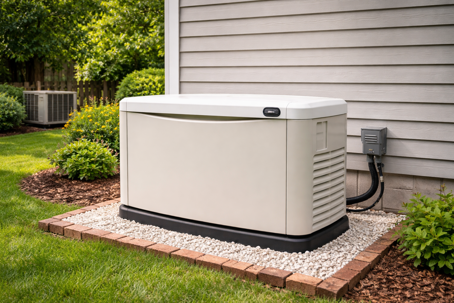
Before you can maintain a generator, you need to understand what kind of system you have and how it connects to your home. Many Portage homes use portable generators, rolled out from the garage and plugged into a designated inlet or used to power a few extension cords. Others rely on permanently installed standby generators that start automatically and power most or all of the home. The maintenance needs are different, but both depend on the same basic pieces: an engine, an alternator that makes electricity, and safe wiring into your home.
The heart of that safe wiring is the transfer switch. The transfer switch is the device that shifts your home off the utility lines and onto generator power, then back again when the grid returns. It also prevents backfeed, which happens when generator power flows back out through the meter into utility lines. Backfeed is dangerous for both your equipment and utility crews. A proper transfer switch isolates the home from the grid so your generator only feeds your panel, not the outside lines.
From a homeowner standpoint, it is helpful to know where your transfer switch is, what position it should be in, and what normal operation looks like during a test. Visual checks for rust, obvious damage, or loose covers are fine, but anything beyond that should be left to a licensed electrician. We regularly find DIY connections into dryer outlets or makeshift setups that bypass the transfer switch entirely. At Hi-Tech Electric Company, our licensed electricians check transfer switches as part of maintenance visits to confirm that they move cleanly between utility and generator power and that all terminations are tight and code compliant.
Essential Monthly Checks Homeowners Can Handle
You do not need to be an electrician to handle basic generator checks. A few simple monthly habits go a long way toward keeping your system ready. The first is a short exercise run. For many units, this means starting the generator and letting it run for 10 to 15 minutes. For a standby generator, the unit may already be programmed to self-test, but it is worth watching and listening while it runs. For a portable unit, you can start it with a light load or no load, just enough to warm the engine and circulate oil.
During that run, listen for anything that sounds off, such as surging, sputtering, or unusual rattles. Step back and look for visible exhaust smoke that seems heavier than usual, and confirm that the output indicator, lights, or basic gauges on the panel look normal. If the unit struggles to start, needs repeated cranking, or stalls when you add a small load, those are early warning signs that should not be ignored. Catching them now often means a simple fix instead of a failure during a storm.
Outside of running the unit, a quick visual inspection around the generator each month is valuable, especially in Portage where debris and snow can build up quickly. Check that leaves, grass clippings, and snow are cleared from vents and around the enclosure so the unit can get proper air flow. Look for obvious oil or fuel spots on the pad or concrete below the unit. On portable generators, verify that fuel caps are secure and that cords and cables are not cracked or frayed. These homeowner checks mirror the first steps our electricians take on a service call, and they often point to issues that deserve a closer look.
Fuel Management: Keeping Your Generator Ready, Not Gummed Up
Fuel is one of the most common reasons portable generators fail in Portage. Gasoline does not stay fresh forever. Over a few months, especially without a fuel stabilizer, it can begin to break down and form deposits. Those deposits gum up the small passages in a carburetor, which is what mixes air and fuel for the engine. When that happens, the generator may crank but not start, or it may start and then stall as soon as you put a load on it.
If you rely on a gasoline powered generator, it helps to treat fuel like a rotating inventory. Store only what you can reasonably use and refresh, use a stabilizer if fuel will sit more than a month or two, and label cans with the purchase date. Many homeowners in Portage buy several cans before storm season and then forget about them for a year or more. By the time the next outage arrives, that fuel can be part of the problem. A simple routine of using stored fuel in other equipment and refilling cans every few months keeps your generator’s supply fresher.
Natural gas and propane systems avoid the stale gasoline issue, but they are not maintenance free. Regulators, valves, and piping all need to be in good condition. Ice buildup or physical damage to exposed sections can restrict flow, which shows up as an engine that will not start or cannot hold speed under load. Any work on gas lines should be handled by trained professionals. When we service standby generators at Hi-Tech Electric Company, we look at the gas supply routing and visible components to spot potential trouble areas, and we can coordinate with the appropriate trades when we see something that needs attention.
Cold Weather, Batteries, and Starting Problems in Portage
Portage winters are tough on any engine that has to start in the cold, and generators are no exception. The battery that turns your generator over loses some of its cranking power as the temperature drops. At the same time, the oil inside the engine thickens in the cold, which makes the engine harder to spin. If the battery was already weak from long periods of sitting or age, that first cold snap can expose the problem quickly.
Most standby generator batteries have a practical lifespan of a few years, especially in climates with wide temperature swings. The challenge is that they often fail quietly. The generator may pass one or two automatic self tests, then suddenly refuse to turn over when the power goes out. Homeowners sometimes assume the whole generator is failing, when the root cause is a simple battery that has lost capacity after years of light use. Regular test runs help keep batteries charged, but they do not replace the need for periodic testing and replacement.
As a homeowner, you can safely look for obvious signs of trouble. Check that the battery area is clean and dry, that there is no heavy white or green buildup on the terminals, and that cables appear snug. Do not attempt to open or rewire anything you are not comfortable with. Our electricians at Hi-Tech Electric Company use proper meters to test battery voltage and performance under load, especially before and after the cold season. We often recommend proactive replacement when a battery is aging or test results are borderline, so your generator is not left depending on a marginal battery during the next ice storm.
Professional Generator Maintenance Tasks You Should Not Skip
There is a clear line between what homeowners can safely check and what should be part of a professional maintenance visit. Inside every generator is an engine that needs oil changes, filters, and periodic tune ups, just like a car. Over time, oil breaks down, picks up contaminants, and loses its ability to protect moving parts. Air filters clog, which makes the engine run rich and sooty. Spark plugs wear, making starts harder and increasing misfires. These are not “nice to have” items, they are fundamental to the generator’s life and reliability.
During a typical maintenance visit, our licensed electricians and technicians can change the oil and oil filter, inspect or replace the air filter, and check spark plugs and ignition components. We also clean and tighten electrical connections, because loose or corroded terminals lead to heat buildup and intermittent failures. On standby units, we verify that the automatic start and stop sequences function properly, and that the generator transitions smoothly to and from utility power through the transfer switch.
The most important part of professional maintenance is realistic testing under load. Hearing a generator start is only half the story. We use proper instruments to measure voltage and frequency while the generator is actually carrying part of the home’s load. This shows how the unit handles stress, whether it holds stable power, and whether breakers, transfer switches, and wiring are working together correctly. With leadership from a fully licensed Master Electrician and a team trained on complex electrical systems, Hi-Tech Electric Company can identify subtle problems during these tests that would be invisible during a simple no load start.
Building a Simple Generator Maintenance Schedule for Your Portage Home
All of this information is more useful when it is turned into a clear schedule you can follow. A practical plan for many Portage homes starts with a brief exercise run once a month, combined with a quick visual inspection for debris, leaks, or anything that looks out of place. Mark this on a calendar or set a reminder on your phone. Some homeowners tie it to another recurring task, such as changing furnace filters or paying a monthly bill, so it becomes part of the routine.
Next, think seasonally. Before summer storm season and before winter, take an extra few minutes during your monthly check to make sure fuel supplies are fresh, snow or yard equipment are not blocking access to the generator, and any portable units are in good physical condition. For standby generators, use these times to watch a self test or manual run and notice how smoothly the system operates. Seasonal checks are when many homeowners catch things like low fuel, overgrown shrubs, or rodent nests around enclosures.
Finally, plan for at least one professional service visit each year, or more often if your generator runs frequently. During that visit, a licensed electrician from Hi-Tech Electric Company can review your maintenance habits, look at any log you keep of runs or fuel changes, and recommend adjustments based on your specific equipment and usage. Because we focus on high quality workmanship at an affordable price, regular maintenance is usually far less expensive than repairing a failed generator or replacing one that wore out early from neglect.
When to Call a Licensed Electrician for Generator Service in Portage
Even with good habits, there are clear signs that it is time to bring in a professional. If your generator fails its self test, will not start during a monthly run, or shuts down when you add normal household loads, those are reasons to call. Other red flags include unusual noises or vibrations, visible damage to wiring or conduits, frequent tripping of breakers when the generator runs, or error codes on a standby unit’s control panel. These symptoms often point to underlying electrical or mechanical issues that need proper tools and training to diagnose.
Anything involving the transfer switch, main panel, or internal wiring is not a DIY project. Incorrect wiring can create shock hazards, fire risks, and backfeed onto utility lines. We have seen homes in the Portage area where portable generators were connected through improvised cords into dryer outlets, which bypasses the safety provided by a transfer switch. When you ask us to inspect or maintain your generator, our licensed electricians check for these conditions and bring the system back into safe, code compliant operation.
Sometimes, you will not discover a problem until an outage is already happening or a storm is clearly on the way. In those moments, response time matters. Hi-Tech Electric Company offers 24/7 emergency electrical services and works to provide same day appointments when possible, so you are not left without support when your generator fails or your transfer equipment acts up. We also provide free estimates, which makes it easier to schedule a maintenance visit before the next big storm, instead of waiting for something to go wrong.
Keep Your Portage Home Powered with Reliable Generator Maintenance
A generator is there to protect your home and your family when the grid goes down, but it can only do that if it is ready. In Portage, that means respecting the reality of our weather, the long stretches when a generator sits unused, and the way batteries, fuel, and electrical connections age quietly over time. A simple mix of monthly exercise runs, fuel management, seasonal checks, and annual professional service greatly increases the odds that your generator will perform when the lights go out.
If it has been a while since your generator was serviced, or if you have noticed hard starts, strange noises, or any of the warning signs described here, now is the right time to act. The team at Hi-Tech Electric Company, led by a fully licensed Master Electrician and backed by decades of local experience, can inspect your system, handle the maintenance tasks that should never be DIY, and help you build a maintenance plan that fits your home. Reach out before the next storm season so your generator is a source of confidence, not uncertainty.
Call (269) 448-1599 today to schedule generator maintenance for your Portage home.